5 Signs Your Baby’s Skin Needs More Moisture
Bask Team
Baby Skin Health Expert
Baby skin is resilient, but it's also constantly communicating. Before full-blown irritation develops, skin often sends smaller signals that it needs more moisture and barrier support. Here's what to watch for.
1. Rough or "sandpapery" patches
Run your fingers gently across baby's skin, particularly on the thighs, belly, or diaper area. If you feel small rough patches that weren't there before, it's a sign that the outermost layer of skin is losing moisture faster than it's being replenished. These patches are often the first indicator that the skin barrier is under stress.
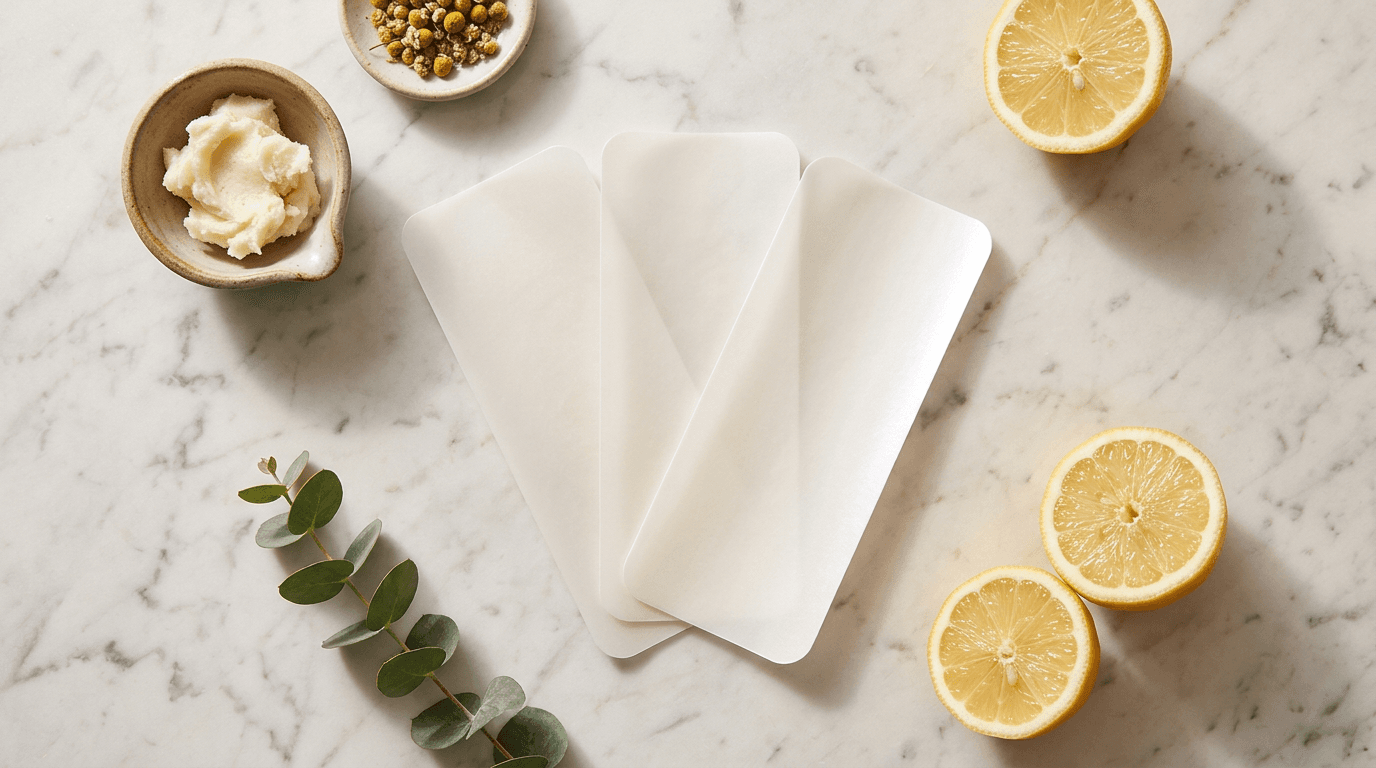
What it means: The lipid "mortar" between skin cells is thinning, allowing transepidermal water loss (TEWL) to increase. Emollient ingredients like shea butter and squalane can help condition and moisturize those areas.
2. Mild redness that comes and goes
A little pink after a bath or a warm diaper? Totally normal. But if you're noticing redness that appears, fades, and reappears in the diaper area without a clear cause, it may indicate that the skin's acid mantle is being disrupted by repeated exposure to urine.
What it means: The skin's pH may be fluctuating. pH buffering can help maintain a more comfortable environment for baby's skin.
3. Skin that feels dry right after a bath
Bath time should leave baby's skin feeling soft. If skin feels tight, dry, or slightly chalky within minutes of drying off, the skin barrier isn't retaining moisture effectively. This is particularly common in winter months or in dry indoor environments.
What it means: The natural moisturizing factor (NMF) in baby's skin may not be fully developed yet. Lightweight, non-greasy emollients can bridge the gap without overwhelming delicate skin.
4. Tiny flakes or peeling
Some peeling in newborns is completely normal, especially in the first few weeks. But if you're seeing small flakes on older babies, particularly in creased areas like the diaper line, groin folds, or around the thighs, it suggests the skin is turning over faster than it can rebuild its barrier.
What it means: The skin is turning over quickly, and the new cells underneath may not have a fully mature surface yet. Gentle conditioning ingredients like panthenol (vitamin B5) are known for helping keep skin feeling soft and comfortable.
5. Increased sensitivity to touch or wiping
If baby flinches, squirms, or cries during diaper changes more than usual, especially during wiping, it could mean the skin is more sensitive than normal. This is often the last sign before visible irritation develops.
What it means: The skin barrier has thinned enough that even gentle friction is uncomfortable. This is the stage where proactive conditioning makes the biggest difference.
What you can do
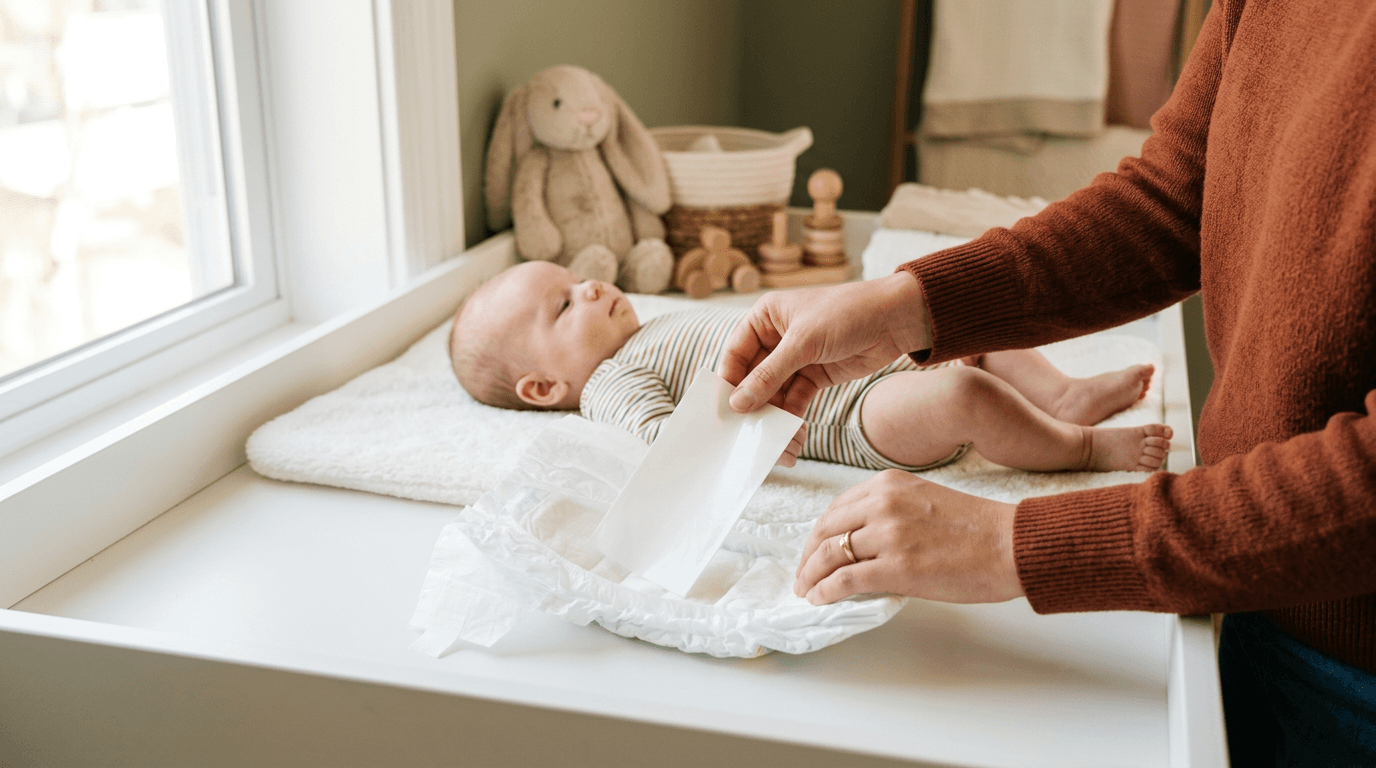
None of these signs are cause for alarm on their own. They're simply your baby's skin telling you it could use a little extra moisture. The key is consistency: keeping the skin conditioned, the pH comfortable, and the environment as gentle as possible. That's exactly what the Bask Gentle Liner is designed to do, automatically, with every diaper change.
If you notice persistent redness, broken skin, or signs that concern you, contact your pediatrician. They can guide you on next steps.